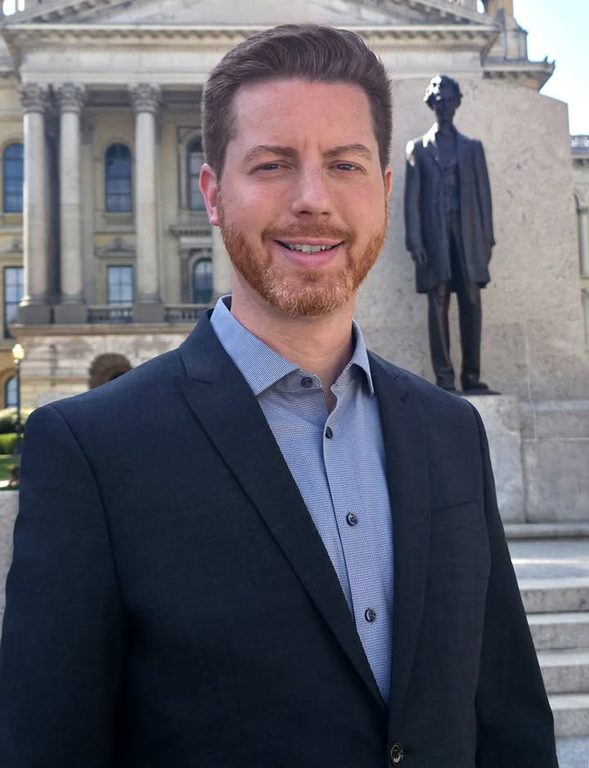
Collin Corbett, an Independent, is running for Illinois governor in the Nov. 3, 2026, general election. He faces Democratic candidate J.B. Pritzker and Republican Darren Bailey.
Asked why he is seeking the office, Corbett said in our candidate questionnaire: "Illinoisans feel stuck. Everything costs more, and we are being asked to do more with less. Better-paying jobs are hard to find. All while we watch our family and friends move away."
He added: "It's time we put everyday Illinoisans back in charge."
Candidate information
Party affiliation: "Independent"
Education: "High School"
Family: "Married to Abbey. One son, Theodore Rex (T Rex), expecting a second child, and a rescue dog, Dustin."
Occupation: "Political strategist and small business owner. Currently on a leave of absence from my companies for this run."
Previous elected or appointed offices: "N/A"
Experience and public service
Corbett said in our questionnaire that he has "recruited and trained over 3,500 everyday people to help them get involved in the political process." He said he "founded Cor Strategies, EmpowerPolitics, and Long9 Studio," through which he has "advanced nearly 1,200 organizations and campaigns throughout the country."
He holds no prior elected office.
Asked what accomplishments qualify him, Corbett said: "I pioneered a community engagement process that brings residents, local businesses, and government leaders together to set priorities and decide what level of taxation they prefer." He lives in Palatine, according to his campaign website.
On the issues
Top priority — affordability: Corbett said in our questionnaire: "How unaffordable our state has become is the single biggest issue for working families. … JB Pritzker has made it worse. He's raised taxes and fees at least 57 times since taking office, costing the average Illinoisan over $1,400 a year more in taxes."
He said he would address the cost of living "by finally lowering property taxes, holding state spending in check, providing relief at the pump, bringing down energy costs, reining in unchecked data center growth, reducing health care costs, and building new affordable, quality housing while stabilizing the value of current housing."
Economy: "Since JB Pritzker took office, Illinois ranks 46th in GDP growth, 45th in job growth, and 39th in income growth," Corbett said. He said he would "scale back these giveaways and instead help our small-to-midsize businesses, manufacturers, and family farmers" and "fix Illinois' broken procurement processes." On his campaign website, Corbett also said he would institute "no tax on overtime and no tax on tips."
Pensions and property taxes: "Decades of politicians underfunding pension funds and high Tier 1 benefit structures mean state funding is consumed paying off legacy debt service," Corbett said. He said he would "freeze discretionary spending" in his first year and "reward local governments for lowering property taxes for working families."
Education: Corbett said: "The number of school districts in Illinois that are adequately funded has declined for three consecutive years under JB Pritzker. … Illinois covers just 24.5% of local school budgets, down from 27% when JB Pritzker took office. The national average is 45%."
Data centers: Corbett said he would "pause all tax incentives for data centers until strict regulations are put in place that ensure data centers pay all their energy costs, limit water usage, and contribute to a property tax relief fund for Illinoisans."
Public safety: Corbett said he would "protect the improvements made under the SAFE-T Act while increasing detainable offenses and judicial discretion." He called fixing the Department of Children and Family Services a priority, saying "more than 1,200 of our most vulnerable children have died and 3,000 seriously injured since 2018" in state care.
Government reform: Corbett said he supports "ending partisan gerrymandering with fair maps, giving voters more choice through open primaries, reducing the power of party bosses through campaign finance reform, and increasing transparency in campaign finances."
Candidate responses were collected through a Surround Sound News questionnaire. All policy positions and biographical claims are attributed to the candidate.